Why Wet Drywall Is More Dangerous Than It Looks
Drywall is essentially compressed gypsum wrapped in paper, and both materials are extremely thirsty. When a supply line bursts upstairs or a roof leak runs down a stud bay, the drywall acts like a wick. It pulls moisture sideways and upward, sometimes two or three feet past the visible stain. That is why the wet area you can see is almost never the full size of the damaged area. We routinely use moisture meters on jobs in Edinburgh where the homeowner pointed at a dinner-plate-sized stain, and the actual saturated zone stretched four feet wide behind the paint.
The bigger problem is what happens inside the wall cavity. Insulation holds water against the back of the drywall. Wall studs and bottom plates absorb it. Without active drying, that hidden moisture sits at the perfect temperature for mold growth, which can begin colonizing the paper facing of drywall in as little as 24 to 48 hours. By day four or five, you are not dealing with a water problem anymore. You are dealing with a microbial one, and that changes the scope and the cost of the project. If you suspect the leak has been quietly running, our guide on water damage behind walls and hidden leak detection explains how we trace moisture you cannot see.
There are also structural concerns that get overlooked when a wall simply looks stained. Wet drywall on a ceiling can gain enough weight to pull away from its fasteners and fall in sheets, especially over a kitchen or hallway where the span is wide. Electrical boxes inside a saturated cavity can corrode at the terminals, and we have seen GFCI outlets fail weeks after a leak because copper inside the box quietly oxidized. None of this is visible from the hallway, which is exactly why a proper inspection matters more than a quick repaint.
When Drywall Can Be Dried and When It Has to Be Cut
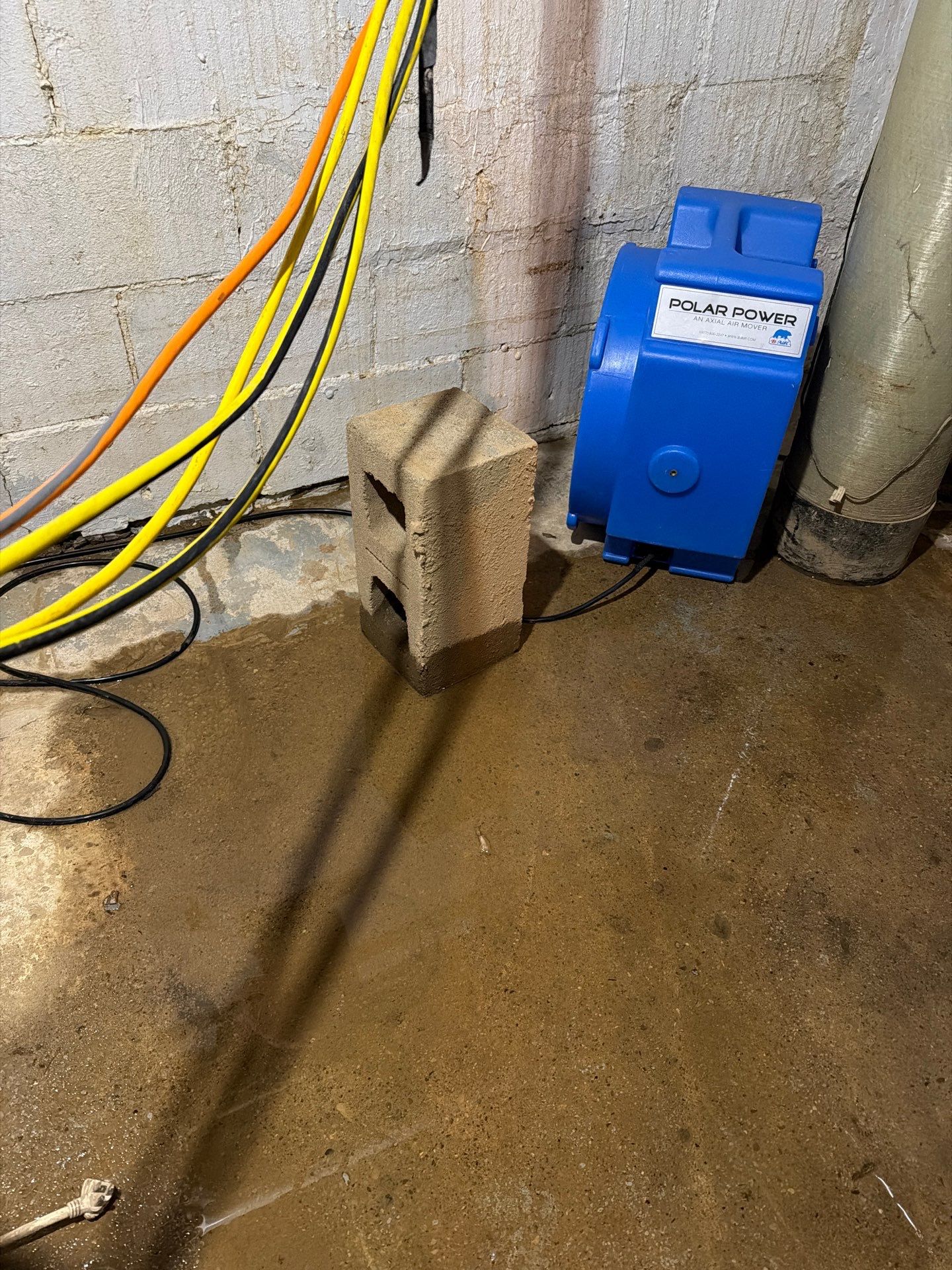
This is the decision that drives everything else, and it comes down to three factors: water category, saturation level, and time. Clean water from a supply line (IICRC Category 1) gives us the most options. If we get on site within the first 24 hours and moisture readings are still in a recoverable range, we can often save the drywall by setting up containment, pulling baseboards, drilling small vent holes near the floor plate, and forcing warm dry air into the wall cavity with air movers and a commercial dehumidifier. A standard drying setup for one room in a Edinburgh home runs three to five days, and we monitor it daily with moisture meters to confirm the readings are dropping.
Gray water from a dishwasher, washing machine, or aquarium (Category 2) is a judgment call. If the drywall is only damp and the contamination is mild, controlled drying can sometimes work, but we are more conservative because the paper facing has absorbed contaminants. Category 3 water, which includes any sewage backup, toilet overflow that traveled beyond the bowl, or floodwater from outside, is non-negotiable. Any drywall touched by Category 3 water has to be removed, typically two feet above the visible water line, along with the insulation behind it. There is no safe way to dry sewage-contaminated gypsum, and we will not pretend otherwise. If that is your situation, our sewage cleanup service handles the demo and decontamination under proper protocols.
Saturation is the second factor. Drywall that has sagged, lost structural integrity, crumbled at the edges, or developed visible mold spots is past the point of drying. The paper has delaminated from the gypsum core, and even if you dried it perfectly, the wall would never hold paint or texture correctly again. Time is the third. After roughly 72 hours of continuous wetness, even Category 1 water starts to behave like Category 2 because bacteria and mold have had time to establish. Wall type also matters. Plaster on lath dries differently than modern half-inch gypsum, and the moisture-resistant green board common in Edinburgh bathrooms holds water longer than people expect because the facing is designed to resist vapor, not absorb and release it.
What Professional Wet Drywall Repair Actually Looks Like
When Edinburgh Water Restoration arrives at a Edinburgh property, the first thing we do is map the moisture. We use pin and pinless meters along with thermal imaging to find the real edges of the wet area. Then we photograph everything for your insurance file, because clean documentation is the difference between a smooth claim and a fight. From there, the work splits into two paths. On a dry-in-place job, we set containment, extract any standing water, remove baseboards, drill discreet airflow holes if needed, and run air movers and dehumidifiers tuned to the cubic footage of the affected space. We come back daily, log readings, and adjust equipment until the structure hits drying goals.
On a cut-and-replace job, we score the drywall at a clean horizontal line, usually two or four feet up to match standard sheet dimensions, remove the wet material along with any saturated insulation, dry the framing and the back side of the exterior sheathing, and treat the cavity with an antimicrobial if conditions warrant. Once moisture readings on the studs are stable and within range, we hang new drywall, tape, mud, sand, prime, texture to match, and paint. Matching an orange peel or knockdown texture on an older Edinburgh home is genuinely a craft, and our finishers spend extra time blending the patch into the surrounding wall so the repair disappears under a single coat of paint rather than announcing itself in raking light. For most single-room repairs in Edinburgh, the full restoration runs anywhere from 1,200 to 4,500 dollars depending on square footage, ceiling involvement, and finish complexity. Larger losses involving multiple rooms or ceilings can climb higher, and we walk you through every line item before work begins. You can read more about pricing logic in our water damage restoration cost breakdown.
Insurance, Timing, and Why Speed Matters
Most homeowner policies in Indiana cover sudden and accidental water damage, which includes burst pipes, appliance failures, and certain roof leaks. They generally do not cover long-term seepage or neglected maintenance, which is one more reason to act fast. Edinburgh Water Restoration is IICRC certified and BBB A+ rated, and we document the loss in the language adjusters expect. We can bill your carrier directly in most cases, and we will tell you honestly if a small loss is better paid out of pocket to protect your premium. The faster you call, the more options you have, the lower the final cost runs, and the less likely you are to find mold three weeks later behind a wall that looked fine on the outside. A same-day response often means drying instead of demo, one room affected instead of three, and a single deductible instead of a second claim down the road when hidden moisture finally surfaces.