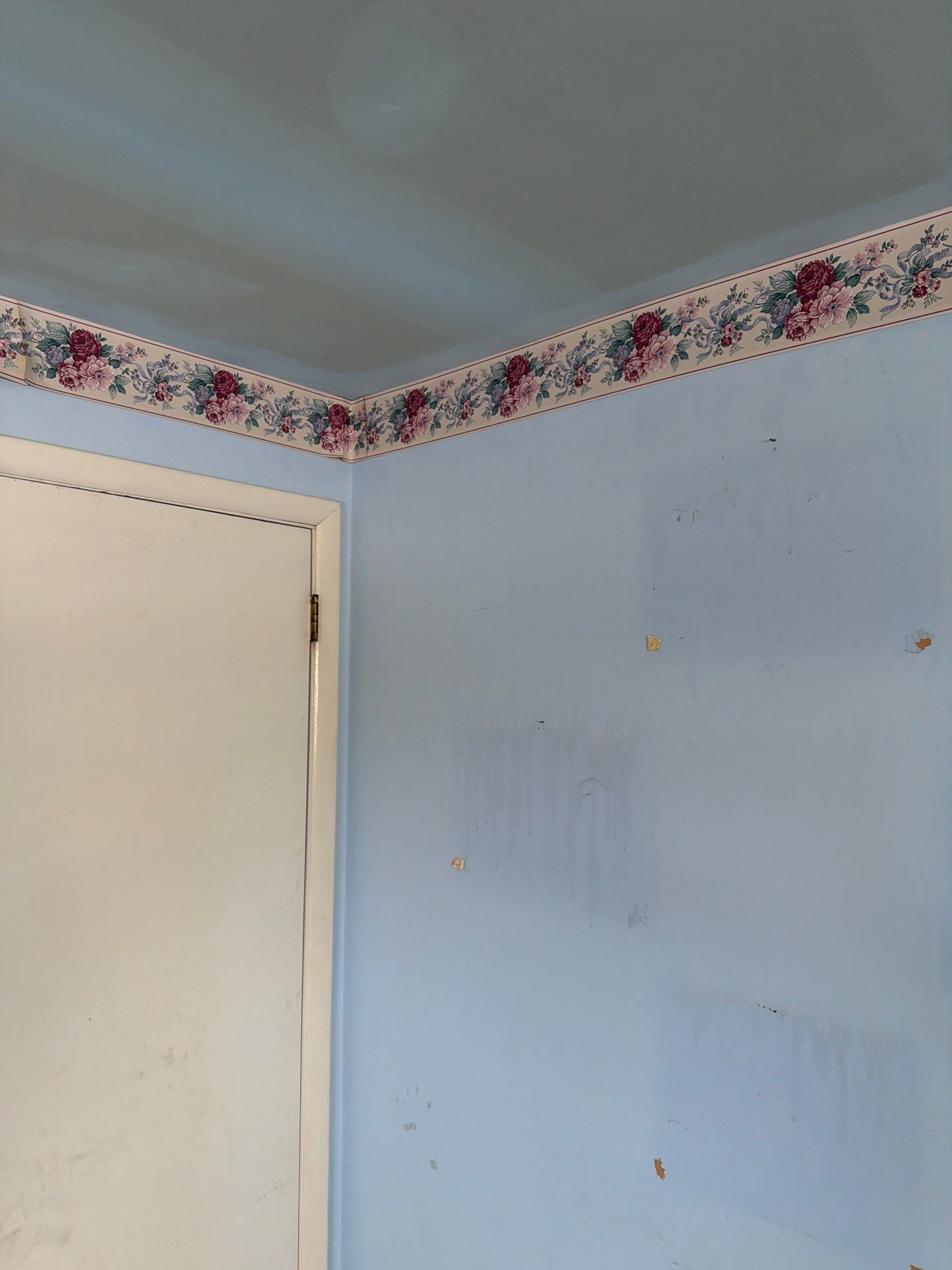
How do we find a leak without ripping the wall open?
Here is the honest answer: we use a stack of non invasive tools, and we use them in a specific order. You would be surprised how much information a wall gives up before anyone touches a saw.
First thing your tech will do is walk the space with a thermal imaging camera. Water moving through a wall cavity shifts the surface temperature of the drywall, sometimes by only a degree or two, but the camera sees it clearly. If you want a deeper dive on that specific tool, we wrote up how moisture mapping with thermal imaging actually works in a separate post. The short version: thermal imaging shows us where the moisture is, not what it is, so it is always step one, never the only step.
Next comes the moisture meter. We use both pin type and pinless meters, depending on the wall finish. Pinless meters read about three quarters of an inch deep without leaving a mark, which is what you want on painted drywall in a finished room. Pin meters come out when we need a precise reading at depth, and the holes they leave are smaller than a thumbtack.
If we still are not sure, we bring in an acoustic listening device. These pick up the hiss or drip of pressurized water inside the wall, and a trained ear can locate a pinhole leak in copper to within a few inches. On bigger jobs, we will also do a pressure test on the supply lines, isolating sections of the plumbing to confirm whether the leak is on the hot side, cold side, or a drain line entirely. Drain leaks are trickier because they only leak when something is running upstairs, so we sometimes have to fill a tub or run a shower to recreate the conditions.
One more tool worth mentioning: a borescope. If the thermal scan flags a spot and the moisture meter agrees, but we still want eyes on the pipe before cutting a bigger opening, we can drill a hole the size of a pencil and snake a camera in. You see the pipe, the insulation, the framing, all of it, on a little screen. Nine times out of ten that confirms exactly which fitting is weeping, and we cut a six inch square instead of a two foot panel. That alone is the difference between a patch your painter handles in an afternoon and a drywall contractor coming back for a second day.
What does this look like for your wallet and your weekend?
You probably want to know what this costs and how long you are going to have crews in your house. Fair questions. Here is a rough breakdown of what detection and the first stage of cleanup typically run in the Edinburgh area, based on what we see week to week.
Notice the assessment is free. That is on purpose. We would rather show up, tell you whether you actually have a leak, and walk away than pressure you into work you do not need. If we do find water in the wall, the next conversation is about how long it has been there, because that changes everything. A leak caught in the first 48 hours is usually a drying job. A leak that has been seeping for weeks is a different animal, and you can read more about that situation in our piece on hidden damage from a slow leak.
On timing, here is what your weekend actually looks like. The initial scan takes about an hour, sometimes ninety minutes if you have a multi story home and we need to check ceilings below the suspected area. If we find the leak and you green light the access cut, that is another two to three hours on the same visit. Drying is where you lose the most calendar time, because air movers and dehumidifiers need to run continuously, and we come back every 24 hours to check moisture readings until the numbers hit dry standard. You can still live in the house during all of this. The equipment is loud, but it is not displacing you.
When should you stop waiting and call someone?
You know your house. If something feels off, it probably is. Watch for these: a faint musty smell that does not go away, paint that bubbles or peels in a spot that used to be fine, a baseboard that feels slightly springy underfoot, or a water bill that crept up without any change in habits. Any one of those alone might be nothing. Two together is worth a phone call. There are more clues in our writeup on early signs of hidden water damage if you want to compare notes.
The reason we push for early detection is mold. Drywall stays wet, gypsum stays warm, and within 48 to 72 hours you have a colony starting behind the paint. At that point detection without demolition gets harder, because we are no longer just chasing water, we are chasing contamination. Our S520 certified crews can still handle it, but you will spend more, and you will lose more of the wall. Catching it early keeps the job small.
One last thing on calling. If you suspect an active leak right now, shut the main off before you pick up the phone. It takes thirty seconds and it stops the bleeding while you wait. When you do call Edinburgh Water Restoration, a crew is dispatched to your Edinburgh address in most cases within 2 hours, and the tech who shows up is the same person who will run the scan, explain what they see, and give you a written scope before any work starts. No surprises, no upsell, just a clear picture of what is behind the wall and what it will take to fix it.